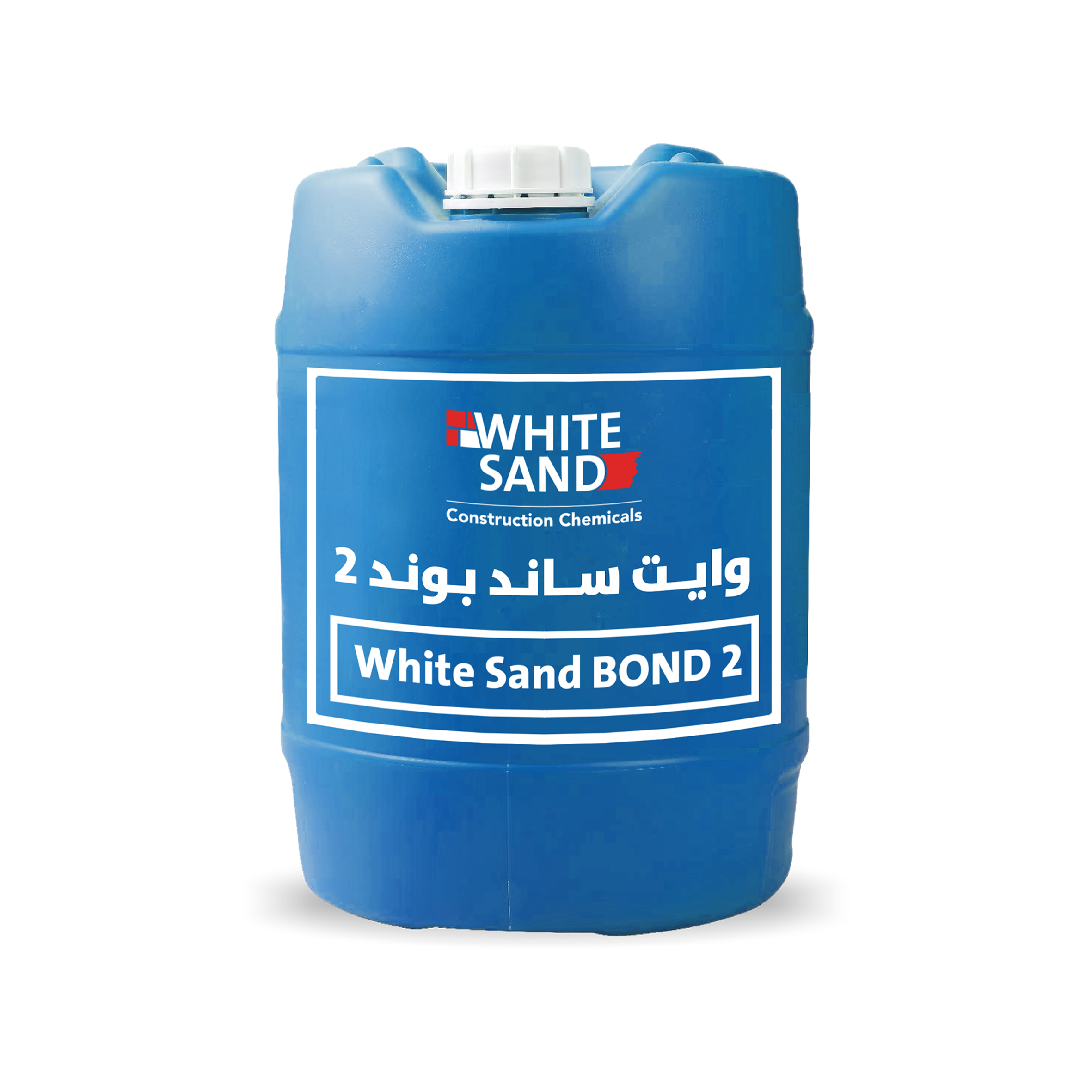

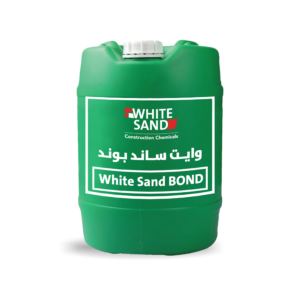
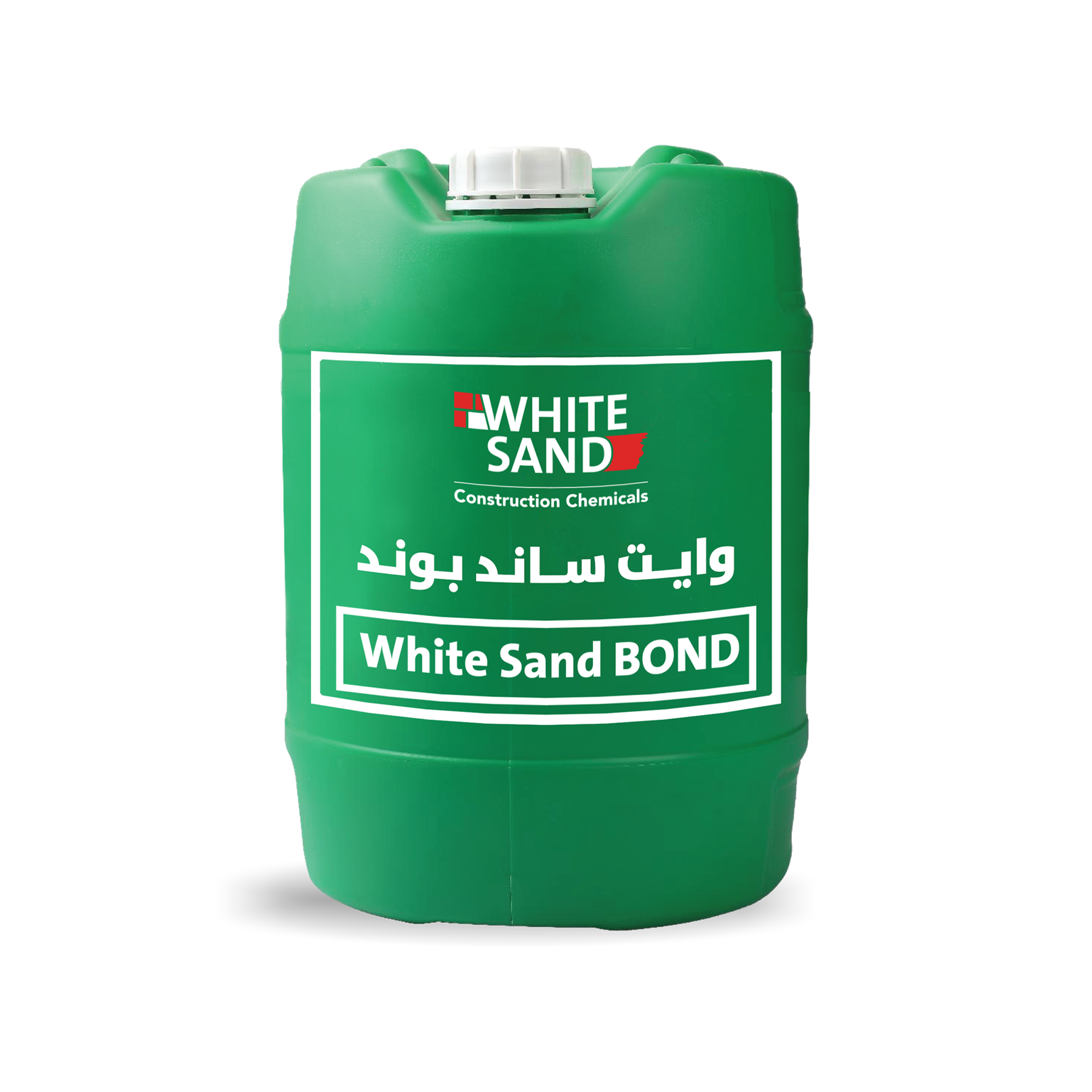
WHITE SAND BOND is a ready-to-use, polymer-based bonding agent and cement modifier designed to improve adhesion, durability, and performance of cement-based mortars, plasters, screeds, renders, and repair materials.
WHITE SAND BOND is used as both a bonding agent and an admixture for cement-based mixes. It enhances the bond between new and existing concrete, improves plaster adhesion, strengthens repair mortars, and modifies screeds and renders.
Yes. WHITE SAND BOND can be applied directly to prepared substrates as a bonding agent before applying plaster, render, screed, mortar, or repair compounds.
Yes. It can replace all or part of the gauging water in cement-based mixes to improve adhesion, workability, hydration, and curing performance.
It is suitable for improving:
Cement plaster
Sand/cement screeds
Cement renders
Repair mortars
Tile adhesives
Cement-based mortars
Patching compounds
WHITE SAND BOND provides excellent adhesion to a variety of construction materials, including:
- Concrete
- Natural stone
- Cementitious
- substrates
- Masonry surfaces
Yes. It is suitable for both interior and exterior construction applications.
Key advantages include:
- Improves adhesion
- Reduces shrinkage and cracking
- Minimizes bleeding in cement mixes
- Enhances hydration and curing
- Improves workability
- Easy to use
- Multipurpose application
- Suitable for many cement-based materials
Apply WHITE SAND BOND directly from the container without dilution using a brush or spray. While the coating remains wet or tacky, immediately apply the plaster, screed, render, or mortar.
No. When used as a bonding agent, it should be applied neat without dilution.
For partial replacement of gauging water, mix 3 parts WHITE SAND BOND with 1 part water, then add the mixture to the dry cement-based materials.
Mix cement-based materials with WHITE SAND BOND for approximately 2 minutes using a low-speed mechanical mixer. Allow the mix to stand for 5 minutes, then remix briefly before application.
Yes. It can be applied using spray equipment or a brush. When using a hand pump, the recommended spray rate is approximately 4–6 m² per liter.
Before application, the surface should be:
- Clean
- Free of dust
- Free of grease and oil
- Free of loose particles
- Free of laitance, paint, varnish, and algae
Mechanical cleaning methods such as brushing or sandblasting are recommended where necessary.
For optimum performance, moisture cure the modified mix for at least one day, then allow it to dry gradually.
Typical properties include:
- Type: Formulated copolymer emulsion
- Appearance: Milky white liquid
- pH: 5–7
- Low VOC content
Polymer-based formulation
Clean all tools and equipment with water before the product hardens. Hardened material must be removed mechanically.
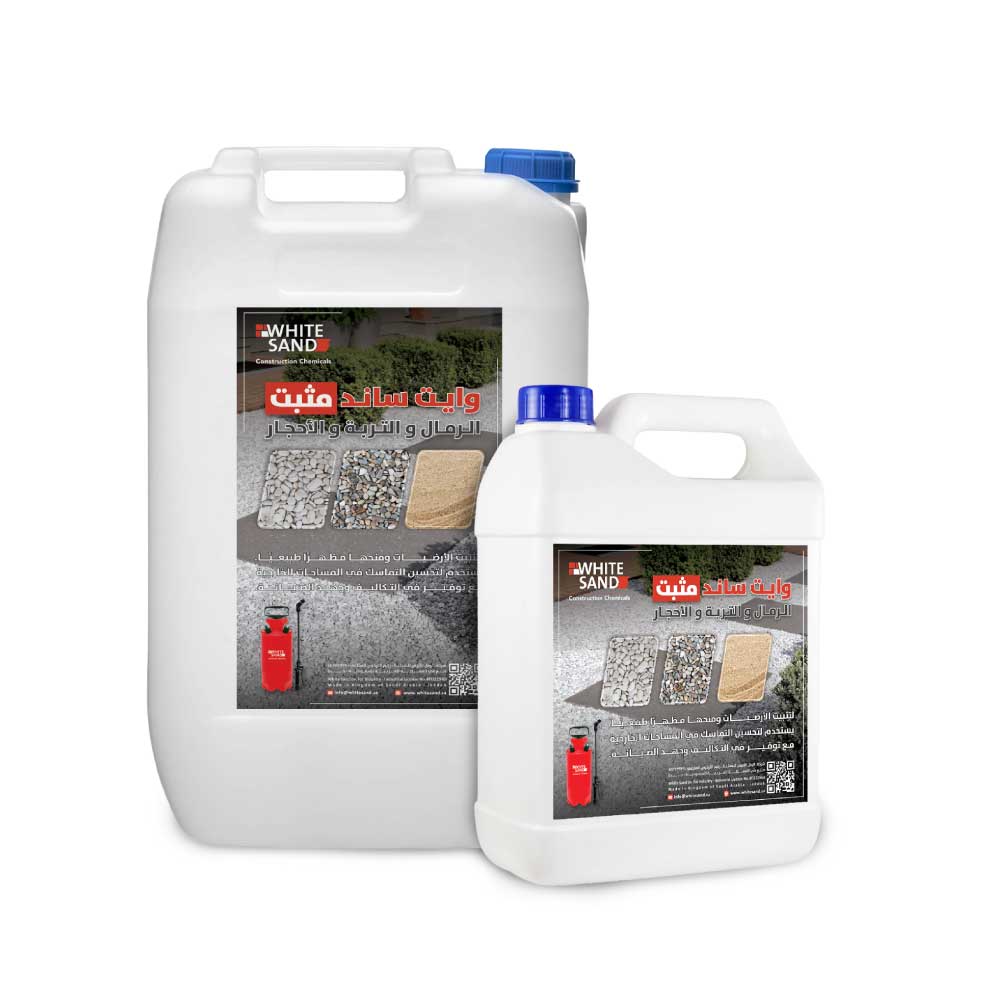
WHITE SAND BOND is supplied in:
- 20-liter drums
- 5-liter containers
The product has a minimum shelf life of 12 months when stored in its original sealed container below 35°C and away from direct sunlight.
No. WHITE SAND BOND is non-flammable and is not classified as a hazardous material under current legislation. However, gloves and safety goggles should always be worn during handling and application.
For best results:
- Use fresh cement and well-graded aggregates.
- Avoid excessive mixing.
- Do not add too much water.
- Avoid over-troweling.
- Protect fresh applications from rapid drying.
Wash affected skin or eyes immediately with clean water. If irritation persists, seek medical advice.
WHITE SAND BOND improves adhesion, reduces shrinkage and cracking, enhances cement hydration, increases durability, and provides a versatile solution for bonding and modifying cement-based construction materials in both interior and exterior applications.