Choosing the right paint is more than just selecting a color. In construction and property maintenance, using the correct type of paint—interior or exterior—directly affects durability, maintenance costs, and overall building appearance.
Many building owners, contractors, and facility managers assume that all paints perform the same. In reality, interior and exterior paints are engineered for completely different environments.
Understanding these differences can help avoid premature peeling, fading, or repainting costs.
Why Paint Types Matter
Buildings in regions like Saudi Arabia and the Gulf face challenging conditions:
- High UV exposure
- Extreme heat
- Humidity near coastal areas
- Dust and sandstorms
Because of these factors, paint must be designed for the environment where it will be applied.
Interior paints focus on aesthetic quality and indoor air safety, while exterior paints prioritize weather resistance and structural protection.
What Is Interior Paint?
Interior paint is designed for indoor spaces such as homes, offices, hotels, and commercial buildings.
These paints are optimized for:
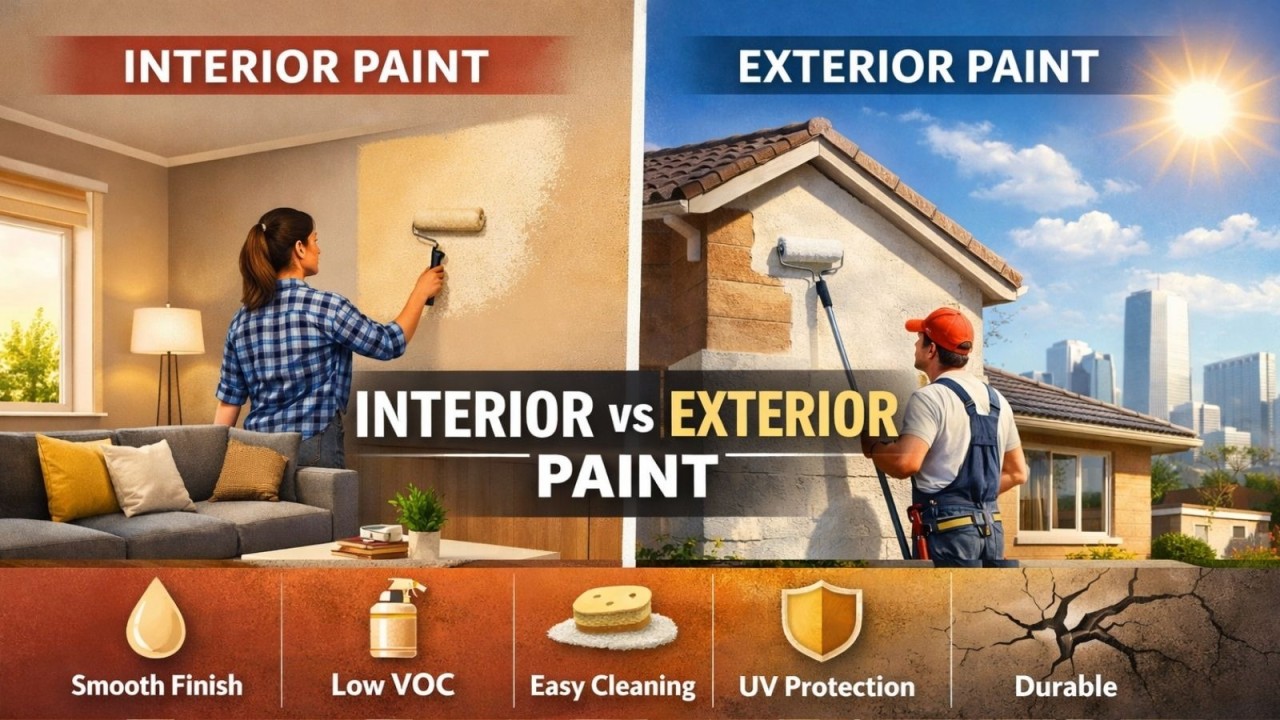
- Smooth finish and attractive appearance
- Low odor and low VOC emissions
- Easy cleaning and stain resistance
- Good color retention
Interior paint does not require heavy weather resistance because it is protected from sunlight, rain, and temperature fluctuations.
Common Interior Paint Applications
- Living rooms
- Bedrooms
- Offices
- Shopping malls
- Hotels and hospitality spaces
Interior coatings are typically water-based paints, making them safer for indoor air quality and easier to apply.
What Is Exterior Paint?
Exterior paint is specifically formulated to protect buildings from environmental damage.
Unlike interior coatings, exterior paints must resist:
- UV radiation
- Rain and moisture
- Temperature expansion and contraction
- Dust and pollution
Because of these challenges, exterior coatings contain stronger binders, additives, and protective pigments.
Typical Exterior Paint Applications
- Building facades
- Villas and residential compounds
- Commercial towers
- Industrial buildings
- Infrastructure projects
Exterior coatings are engineered to maintain color stability and surface protection for many years.
Key Differences Between Interior and Exterior Paint

Using exterior paint indoors is usually unnecessary, while using interior paint outdoors can result in fast deterioration and peeling.
Why Exterior Paint Is Critical in Hot Climates
In regions such as Riyadh, Jeddah, and other Gulf cities, buildings experience extreme solar exposure.
Exterior coatings must therefore provide:
- UV resistance to prevent fading
- Thermal flexibility to avoid cracking
- Moisture resistance to protect concrete and plaster
Without these protective properties, exterior walls may require repainting within a short period.
Choosing the Right Paint for Your Project
Before selecting paint, contractors and project owners should consider:
- Building location and climate
- Surface type (concrete, plaster, metal)
- Expected durability
- Maintenance requirements
Working with high-quality paint manufacturers and suppliers ensures longer coating life and reduced maintenance costs.
Final Thoughts
Interior and exterior paints may look similar in the can, but their formulation, durability, and performance are completely different.
Selecting the correct coating type ensures:
✔ Longer building protection
✔ Better appearance
✔ Reduced repainting costs
For construction professionals, understanding these differences is essential for delivering high-quality, long-lasting projects.
Connect with us to discuss your paint requirements.
White Sand Co. is Based in Jeddah – Serving all Saudi Arabia