
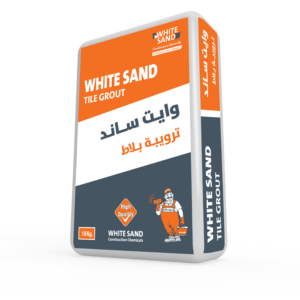

White Sand Tile Grout is a cementitious, polymer-modified tile joint filler used to fill gaps between ceramic, porcelain, marble, and stone tiles. It provides a durable, colored, and water-resistant finish for tile joints in walls and floors. (whitesand.sa)
Tile grout is used to:
- Fill joints between tiles
- Lock tiles in place
- Prevent water and dirt penetration
- Improve the final aesthetic appearance
It is an essential part of any tile installation system.
It is suitable for:
- Interior and exterior applications
- Floors and wall tiles
- Dry and humid environments
- Residential and commercial spaces (whitesand.sa)
It can be used with:
- Ceramic tiles
- Porcelain tiles
- Marble and natural stone
- Terrazzo and mosaic tiles
It is designed for all common tile systems.
- Water-resistant formulation
- High color stability (does not fade easily)
- High resistance to dirt pickup
- Wide range of decorative colors
- Strong adhesion and durability (whitesand.sa)
It is water-resistant, meaning it reduces water penetration into joints. For fully submerged environments (like swimming pools), a specialized grout system is recommended.
It is typically used for:
- Wall tiles: 2–6 mm joints
- Floor tiles: 3–8 mm joints
This ensures proper filling and performance. (whitesand.sa)
- Approximately 3.0 liters of clean water per 10 kg bag
Proper mixing ensures smooth application and consistent color. (whitesand.sa)
Typical performance:
- Pot life: ~60 minutes
- Initial setting: ~4 hours
- Final set: ~24 hours (whitesand.sa)
Excess grout should be cleaned within 15–30 minutes after application before it hardens on the tile surface.
- Light foot traffic: after 24 hours
- Full curing strength: after several days depending on conditions
White Sand Tile Grout is formulated for high color stability and resistance to discoloration, helping maintain its appearance over time.
Yes. It has high resistance to dirt and stain absorption, making it suitable for kitchens, bathrooms, and high-traffic areas.
Standard grout is water-resistant, while specialized versions (like antimicrobial grout) help reduce microbial growth. Proper sealing and maintenance improve hygiene performance.
Grout is essential because it:
- Locks tiles in place
- Prevents water infiltration
- Absorbs slight movement between tiles
- Enhances visual finishing
Without grout, tile systems would fail structurally over time.