
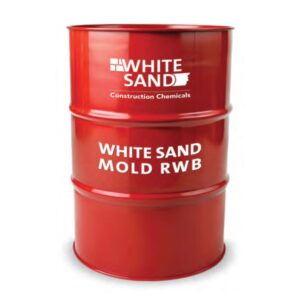
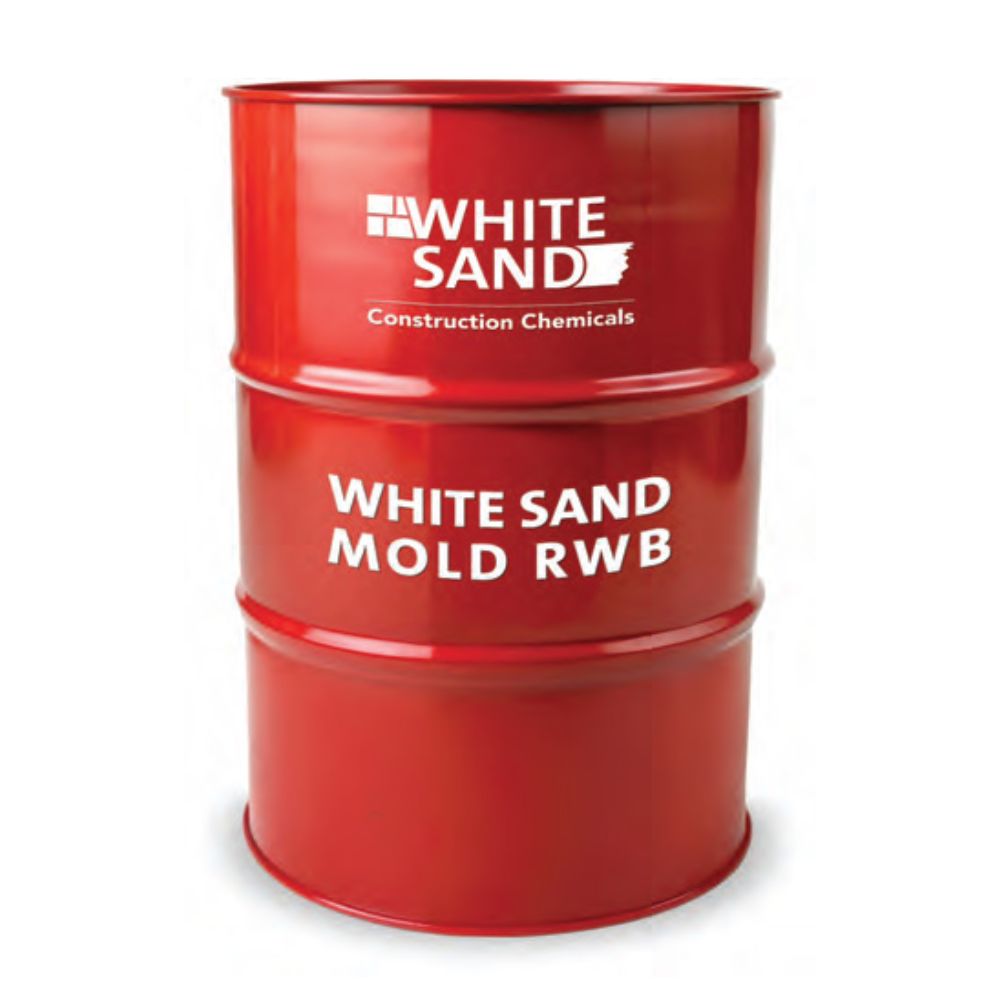
White Sand MOLD RWB is a ready-to-use, water-based release agent that helps hardened concrete separate cleanly from molds and formwork.
It is applied to molds and formwork before casting concrete to facilitate stripping, reduce surface damage, and help achieve a smooth, uniform concrete finish.
It is suitable for steel, plastic, timber, and plywood formwork, including molds faced with these materials.
Its lubricating and releasing properties reduce adhesion between concrete and the mold surface, allowing easier and cleaner removal after the concrete has hardened.
Yes. Proper application helps minimize surface blemishes, staining, and dusting, producing a smoother and more uniform finish, particularly on exposed concrete.
Yes. Easier stripping reduces the likelihood of formwork damage during removal, helping preserve molds for repeated use.
New molds generally require no special preparation. Any rust on metal molds should be removed with a wire brush or emery cloth, followed by cleaning before application.
Remove old concrete, cement laitance, dirt, previous mold oil, and other contaminants. Use mechanical cleaning where necessary, followed by a suitable cleaning solution to leave the surface clean.
No. White Sand MOLD RWB is supplied ready to use and can be applied directly to prepared formwork.
Apply it using a brush, roller, or sprayer. When spraying, use a fine nozzle to distribute a light, continuous film across the mold surface.
Apply a thin, uniform, continuous film. Excessive application should be avoided, as accumulated product can affect the concrete surface.
Allow excess material to drain, then remove any remaining pools with a sponge or cloth. Do not allow pools to dry, as they can delay setting at the concrete surface.
Typical coverage is approximately 35 m² per liter, depending on the mold surface texture and application conditions.
White Sand MOLD RWB is available in 20-liter containers and 200-liter drums, suitable for different project requirements.
Keep the product in its original sealed container, away from direct sunlight, in suitable warehouse conditions at temperatures below 35°C.