
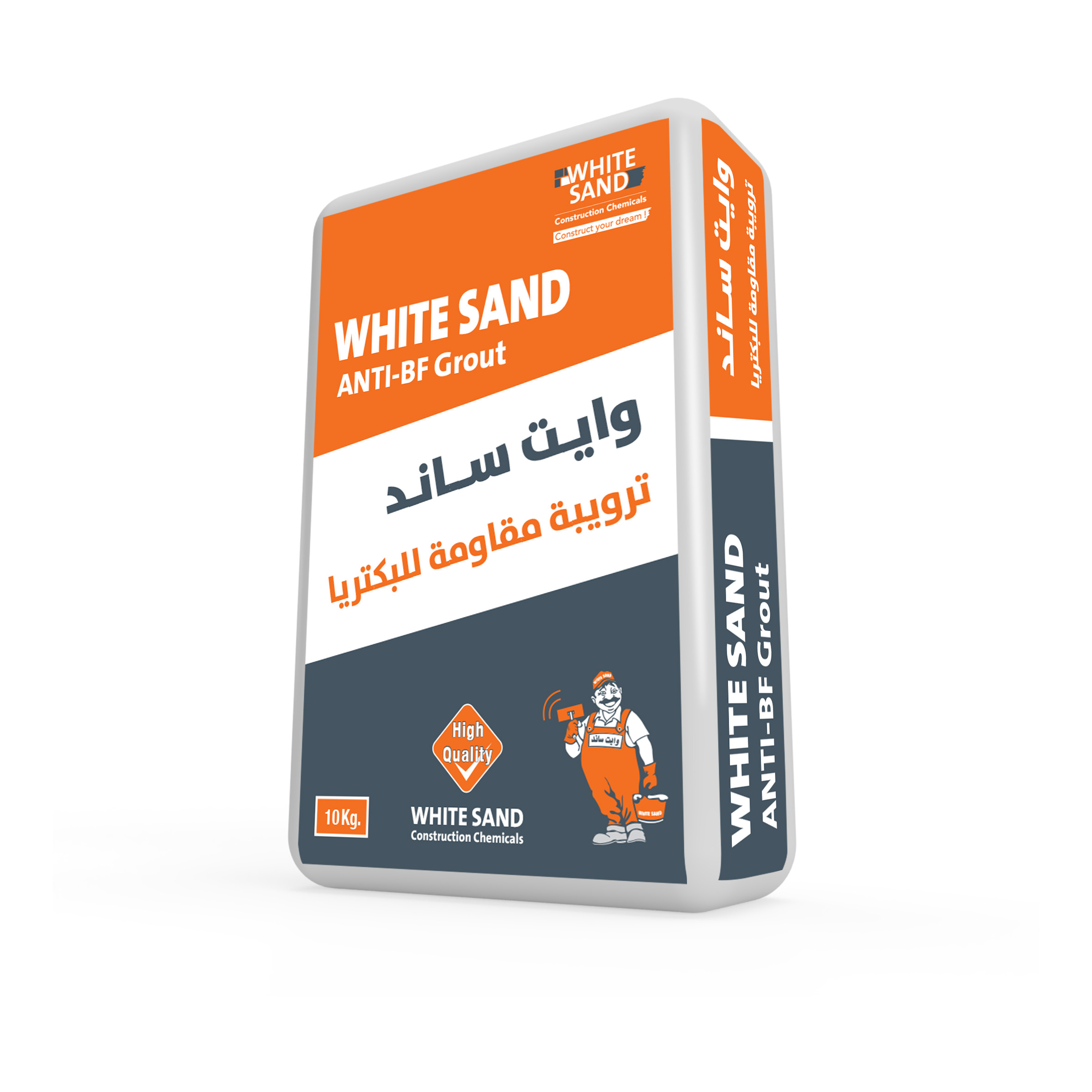
White Sand Anti-BF Grout is a cementitious, polymer-modified tile grout with antibacterial and antifungal properties. It is designed to fill tile joints while preventing the growth of bacteria, algae, and fungi in high-hygiene environments.
“Anti-BF” stands for Anti-Bacterial and Anti-Fungal. It means the grout contains special biocides that help inhibit microbial growth, making it suitable for hygienic and health-sensitive areas.
It is used for:
- Hospitals and healthcare facilities
- Kitchens and food preparation areas
- Bathrooms and wet areas
- Residential and commercial tile installations
- Internal and external tiling systems
It is suitable for:
- Interior walls and floors
- Wet and humid environments
- Areas requiring high hygiene standards
It can be used with:
- Ceramic tiles
- Porcelain tiles
- Marble and natural stone
- Mosaic and terrazzo tiles
It is suitable for most standard tile systems.
- Antibacterial and antifungal protection
- Reduces growth of algae and microbes
- Water-resistant formulation
- High abrasion resistance
- Good stain resistance
- Suitable for hygienic environments
It is low water permeability and water-resistant, helping reduce moisture penetration in tile joints. However, it is not a full waterproof membrane system.
Yes. It is suitable for both internal and external applications, including exposed tiled surfaces.
It is suitable for filling tile joints up to:
- Up to 8.0 mm width
This makes it compatible with most ceramic and porcelain tile installations.
Antibacterial grout helps:
- Improve hygiene in wet areas
- Reduce odor-causing bacteria
- Prevent mold and fungal growth
- Maintain cleaner tile surfaces for longer
This is especially important in Saudi Arabia’s humid and hot environments.
Yes. It is specifically designed for health-related construction areas, including:
- Hospitals
- Clinics
- Industrial kitchens
- Food processing facilities
Yes. It has excellent stain resistance properties, helping maintain cleaner and more durable tile joints over time.
It offers:
- High abrasion resistance
- Strong bond strength
- Long-term color stability
- Resistance to microbial damage
Bathrooms create conditions for:
- Moisture buildup
- Mold growth
- Bacterial contamination
Anti-BF grout reduces these risks, improving hygiene and maintenance performance.