
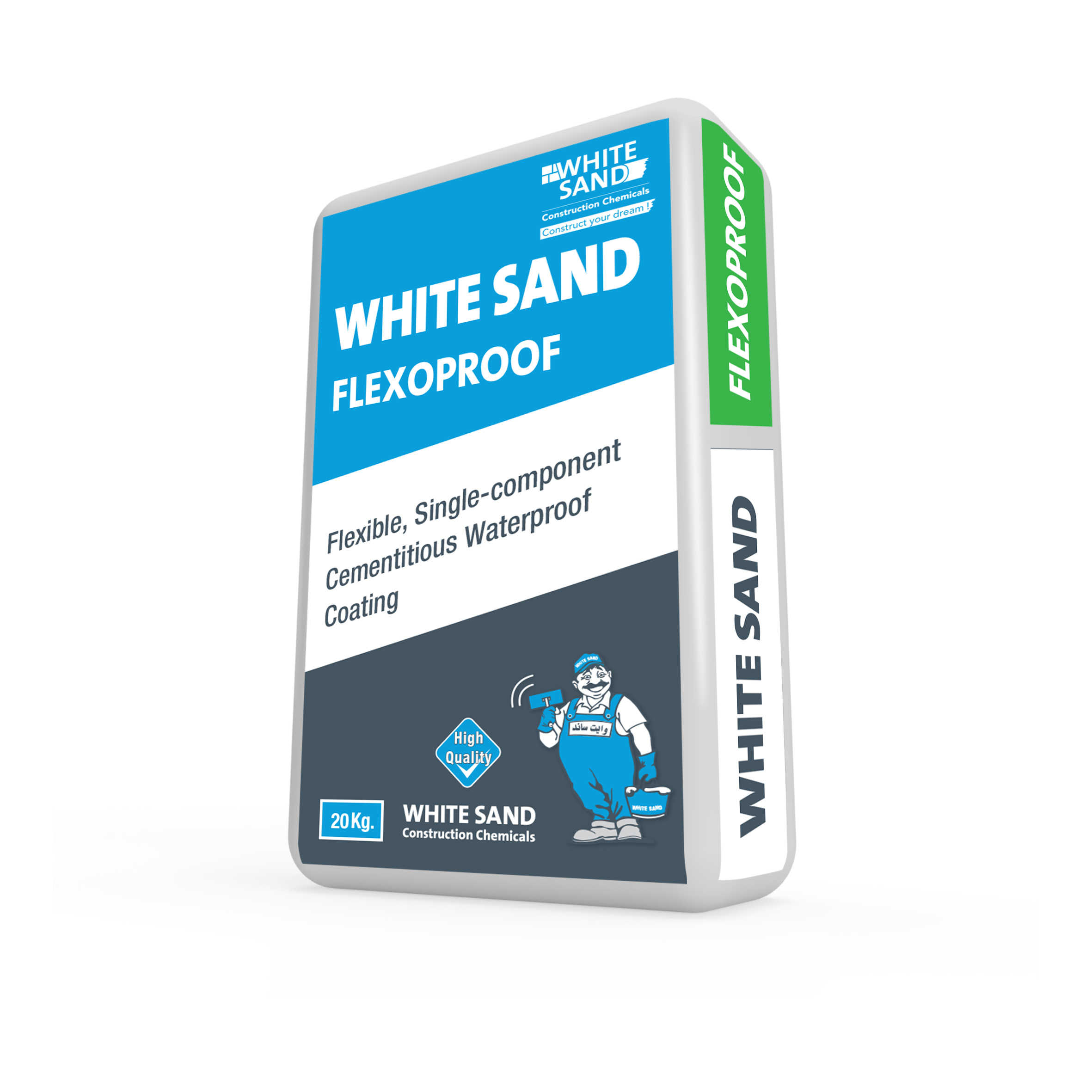
WHITE SAND FLEXOProof is a single-component, polymer-modified cementitious waterproof coating designed to protect concrete, mortar, and masonry surfaces from water penetration and moisture. It is mixed with clean water before application and forms a durable waterproof barrier.
It is used for waterproofing water tanks, swimming pools, bathrooms, roofs, foundations, canals, culverts, boundary walls, concrete structures, and wet areas beneath ceramic tiles.
Yes. WHITE SAND FLEXOProof is non-toxic and solvent-free, making it suitable for waterproofing potable water tanks.
Yes. It is specifically designed for waterproofing swimming pools and other permanently wet or submerged structures.
Yes. It provides an effective waterproof membrane beneath ceramic, porcelain, and stone tiles in bathrooms, kitchens, balconies, terraces, and other wet areas.
It can be applied to concrete, cement mortar, masonry, blockwork, rendered surfaces, and similar cementitious substrates.
Yes. Its polymer-modified formulation allows it to accommodate minor substrate movement and bridge small cracks, helping maintain waterproof protection.
Yes. It provides an excellent barrier against chloride ions, carbon dioxide, sulphates, and water, helping protect reinforced concrete from corrosion.
Yes. It allows water vapor to escape while preventing liquid water from penetrating the substrate, reducing the risk of trapped moisture.
Yes. It offers good resistance to weathering and ultraviolet (UV) exposure, making it suitable for exterior applications.
WHITE SAND FLEXOProof is supplied in grey.
A 20 kg bag should be mixed with approximately 7 kg of clean water. A small additional amount of water may be added if needed to achieve the desired consistency.
Use a slow-speed electric mixer with a mixing paddle for at least two minutes until a smooth, lump-free consistency is achieved. Allow the mix to stand for five minutes before application.
It can be applied using a brush, roller, trowel, or suitable spray equipment, depending on the project requirements.
Two coats are recommended for maximum waterproofing performance. Each coat should be approximately 1 mm thick.
The mixed material has a pot life of approximately 60 minutes under normal conditions.
It provides a bond strength of at least 2.0 MPa, ensuring excellent adhesion to properly prepared cementitious surfaces.
The minimum recommended application temperature is +5°C.
Approximate coverage for two coats at 1 mm thickness per coat is:
- Spray application: up to 17 m²
- Brush application: up to 15 m²
- Trowel application: up to 12 m²
Actual coverage depends on substrate condition and application method.
Surfaces should be clean, sound, and free from dust, laitance, oil, grease, loose particles, moss, algae, or other contaminants. The substrate should be pre-wetted before application.
For applications exposed to continuous water immersion, the coating should be cured for seven days before service.
Clean all tools and equipment immediately with clean water before the material hardens. Hardened material must be removed mechanically.
WHITE SAND FLEXOProof is supplied in 20 kg bags.
The product has a shelf life of 12 months when stored in its original unopened packaging in a dry, shaded environment below 35°C.
No. It is non-flammable and is not classified as hazardous under current regulations. However, protective gloves and goggles should always be worn during handling and application.
Key benefits include:
- Excellent waterproofing performance
- High bond strength
- Flexible crack-bridging capability
- Suitable for potable water tanks
- UV and weather resistance
- Protection against chloride ions, sulphates, and carbon dioxide
- Good abrasion resistance
- Breathable to water vapor
- Cost-effective waterproofing solution
- Suitable for interior and exterior applications
WHITE SAND FLEXOProof combines flexibility, durability, strong adhesion, weather resistance, and long-lasting waterproof protection, making it an excellent solution for residential, commercial, industrial, and infrastructure waterproofing applications.