
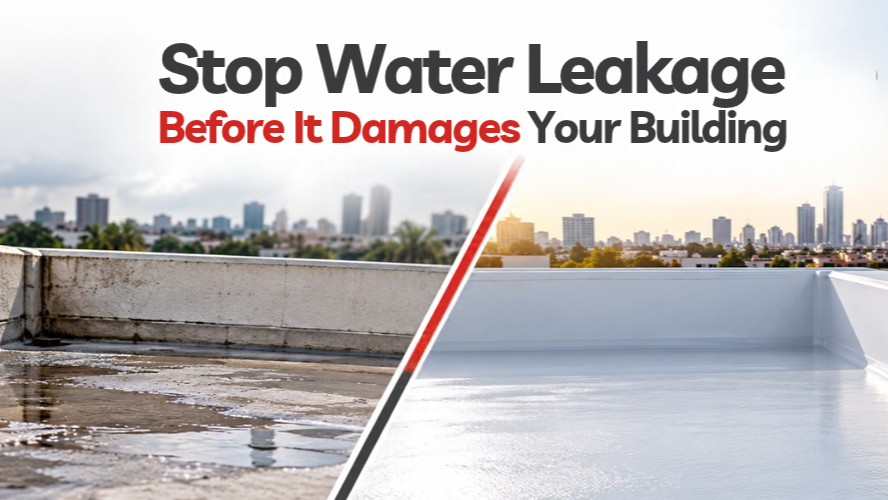
Roof waterproofing helps prevent rainwater from entering a building through its roof. In Saudi Arabia, an effective solution starts with roof inspection, sound surface preparation, repaired defects, suitable drainage and a correctly applied waterproofing system. White Sand RUBBER COAT is an acrylic membrane option for specified roof applications.
Protect your building before water damage begins—with the right system and the right application.
Water leakage is one of the most disruptive maintenance problems for residential villas, commercial buildings and industrial facilities. Roofs are exposed to intense sunlight, high temperatures, seasonal rainfall and continuous temperature changes. Over time, cracks, damaged waterproofing layers and poorly detailed junctions can allow water to penetrate the structure.
The result can include water stains, peeling paint, damaged ceilings, mold growth and costly repairs. For contractors, engineers, facility managers and property owners in Jeddah and across Saudi Arabia, preventive roof maintenance is an essential part of protecting building value.
Why Does Roof Waterproofing Fail?
Many waterproofing problems begin with small issues that are overlooked:
- Cracks developing in roof surfaces as temperatures change.
- Poor surface preparation before applying waterproofing materials.
- Aging, damaged or poorly bonded waterproofing layers.
- Water accumulation caused by inadequate drainage.
- Weak detailing around drains, pipe penetrations and roof-to-wall junctions.
- Improper application or insufficient protection of the finished membrane.
The key is to address these issues before a small leak becomes expensive damage. A coating should be selected as part of a complete roof waterproofing system, with substrate compatibility and project conditions checked first.
Warning Signs to Check Before the Next Rainfall
Inspect ceilings for new damp marks and examine the roof for peeling coatings, open joints, cracks and blocked outlets. Pay particular attention to areas around rooftop equipment and service penetrations. A stain indoors does not always identify the exact entry point, so locate the source before specifying repairs.
Where a roof has recurring leakage, ask the contractor to record the condition of existing layers and explain how drainage, repairs and junctions will be addressed. Recoating without resolving these defects may leave the original problem in place.
The White Sand Solution for Roof Protection
White Sand provides waterproofing and protective coating solutions to help contractors, engineers and property owners address water penetration and surface protection challenges.
White Sand RUBBER COAT is a single-component, water-based elastomeric acrylic waterproofing membrane for roof protection and specified residential and commercial applications. Its flexible coating forms a continuous protective layer on properly prepared, compatible surfaces.
المزايا الرئيسية لوايت ساند روبر كوت
- A flexible membrane with crack-bridging properties.
- A seamless barrier that helps resist rainwater penetration.
- Weathering and UV resistance for specified exposed applications.
- Single-component preparation and application.
- Compatibility with several substrates, subject to correct preparation and product instructions.
Product selection must account for roof condition, existing coatings and intended service. Obtain project-specific guidance before using a roof system in areas with standing water, heavy traffic or other demanding exposure.
The Right Application Makes the Difference
For effective roof waterproofing, the product is only part of the solution. The installation should follow a clear sequence:
- Inspect the roof: identify cracks, damaged areas, drainage problems and vulnerable junctions.
- Clean the surface: remove dust, loose materials, oils and contaminants that could affect adhesion.
- Repair and prepare: address defects and prepare the substrate in accordance with the system requirements.
- Apply the specified system: follow the product instructions for primer, coverage, coat thickness and number of coats.
- Allow proper curing: protect the coating during curing before exposure to water or subsequent work.
- Document and maintain: record the installed system and arrange periodic checks, especially before seasonal rainfall.
Always refer to the current technical data sheet for application conditions, compatibility, coverage and curing requirements. The White Sand product page lists a full cure of seven days; site conditions and the complete system requirements must also be considered.
Planning Roof Waterproofing in Jeddah and Saudi Arabia
Before requesting a quotation, prepare the roof area in square metres, substrate type, existing waterproofing details, photographs of damage and the project location. Explain whether the roof is exposed, tiled, used for access or fitted with equipment. These details help the supplier and applicator recommend an appropriate solution and estimate materials more accurately.
For Arabic-speaking project teams, roof waterproofing is commonly described as عزل الأسطح, while roof leakage repair is معالجة تسربات الأسطح. Whether your enquiry is in Arabic or English, share the roof condition and service requirements rather than choosing a material by name alone.
Frequently Asked Questions About Roof Waterproofing
What is the best waterproofing solution for a roof in Saudi Arabia?
The appropriate system depends on the substrate, existing layers, drainage, movement and intended use. An acrylic roof membrane such as White Sand RUBBER COAT may suit specified applications after a site assessment and compatibility check.
Can a waterproof coating repair every roof leak?
No. Cracks, failed junctions, drainage defects and damaged substrates need suitable treatment. The cause of leakage should be resolved before applying the waterproofing layers.
Can White Sand RUBBER COAT be applied over roof tiles?
Tiles are among the substrates listed on the product page. Existing surfaces still require inspection, appropriate cleaning and preparation, and confirmation of compatibility before application.
When should roof waterproofing be inspected?
Inspect before seasonal rainfall, after roof maintenance or equipment installation, and whenever damp marks or visible coating damage appear. Include the roof in the building’s planned maintenance programme.
Protect Your Roof Before Water Damage Begins
Waterproofing is an investment in the protection, durability and long-term value of your building. Whether you are working on new construction or maintaining an existing property, choosing an appropriate system and applying it correctly can help prevent future problems.
Planning a roof waterproofing project? Contact White Sand with your roof area, location and surface condition, or speak to the team on WhatsApp about product selection and technical guidance.
Related reading: White Sand RUBBER COAT and concrete protection.