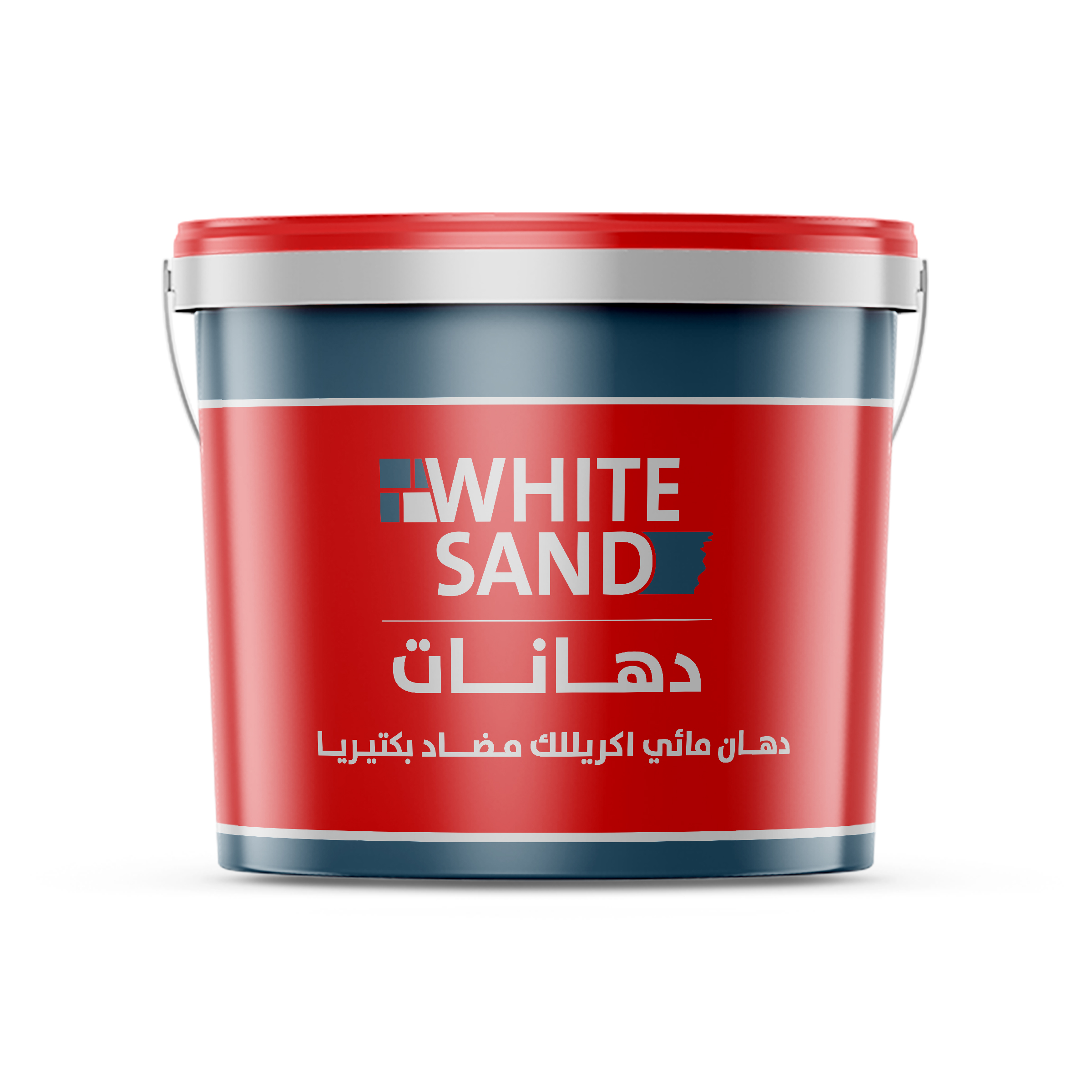
Uses
- Interior walls requiring an antibacterial and antifungal finish.
- Suitable for concrete surfaces.
- Suitable for cement-plaster and rendered surfaces.
- Suitable for blockwork and masonry surfaces.
- Suitable for gypsum-board surfaces.
- Suitable for healthcare, educational and commercial facilities.
- Suitable for residential interior walls.
- Suitable for areas requiring a smooth and easily maintained matt finish.
Advantages
- Antibacterial activity against tested microorganisms.
- Antifungal activity against tested microorganisms.
- Helps prevent the formation of bacteria and fungi on coated surfaces.
- Provides a smooth matt finish.
- Easy to apply with excellent spreading properties.
- High covering power.
- Excellent retouching properties.
- Does not splash during application.
- Produces minimal brush or roller marks.
- Odourless during and after application.
- Water-based formulation.
- Low VOC content.
- Can be applied by roller, brush or spray.
- Available in white and selected base colors.
Substrate Preparation
The substrate must be structurally sound, clean, dry and free from dust, oil, grease, cement laitance, curing agents, form-release agents and other contaminants that may reduce adhesion.
Remove all traces of curing and form-release materials. Lightly sand the surface using a suitable abrasive material and remove all resulting dust and loose particles before application.
Repair cracks, holes and surface defects with suitable repair or filling materials. Previously painted surfaces must be checked for compatibility and adhesion.
Recommended Coating System
- Apply one coat of a suitable WHITE SAND primer.
- Apply two coats of WHITE SAND PUTTY when surface leveling is required.
- Sand the putty and remove all dust.
- Apply two coats of WHITE SAND ANTI-BACTERIAL EMULSION.
Alternative coating systems may be specified depending on the substrate and intended area of use.
Mixing and Dilution
Stir the product thoroughly before use. Where containers from different production batches are used on the same area, mix their contents together before application to ensure a uniform color.
Dilute with clean water when necessary. The maximum recommended dilution is approximately 10-15%, depending on the application method and site conditions.
Application
- Ensure that the substrate is clean, dry and correctly prepared.
- Apply using a roller for main wall areas.
- Use a brush for corners, edges and detailed areas.
- Airless or conventional spray equipment may also be used.
- Apply uniformly within the recommended wet-film thickness.
- Allow the first coat to dry completely before applying the second coat.
- Ensure that the surface is clean and free from contamination before recoating.
Application Conditions
- The substrate temperature must be at least 10°C.
- The substrate temperature must be at least 3°C above the air dew point.
- Provide adequate ventilation to ensure correct drying.
- Forced ventilation may be required in enclosed areas.
Yield and Coverage
The theoretical coverage is approximately 10-14 m² per litre at the recommended film thickness.
Actual consumption depends on substrate porosity, surface condition, application method, film thickness and material wastage.
Drying and Recoating
At 50% relative humidity, typical drying times are:
- At 10°C: touch dry in approximately 12 hours, hard dry in 16 hours and ready for recoating after 12 hours.
- At 23°C: touch dry in approximately 6 hours, hard dry in 8 hours and ready for recoating after 6 hours.
- At 40°C: touch dry in approximately 2 hours, hard dry in 4 hours and ready for recoating after 2 hours.
Cleaning
Clean tools and application equipment with clean water immediately after use. Hardened material must be removed mechanically.
Storage and Shelf Life
Store WHITE SAND ANTI-BACTERIAL EMULSION according to applicable national regulations. Keep the containers tightly closed in a dry, cool and well-ventilated location, away from heat and ignition sources.
Packaging
Health and Safety
- Read and follow the environmental and precautionary information displayed on the container.
- Refer to the latest Safety Data Sheet before use.
- Wear suitable protective gloves, safety goggles and protective clothing.
- Avoid contact with the skin and eyes.
- Avoid inhaling spray mist.
- Ensure adequate ventilation during application and drying.
- Keep containers tightly closed when not in use.
- Dispose of waste and empty containers according to applicable local regulations.
Quality and Technical Support
WHITE SAND products are developed and manufactured under a quality-oriented product-development process and an independently standardized quality management system.
WHITE SAND provides technical assistance regarding surface preparation, primer and putty selection, application equipment and antibacterial interior coating systems.